 Apr 16 2021
  Apr 19 2021
  May 05 2021
  May 07 2021
  May 15 2021
  May 17 2021
 © 2022 All rights reserved Worktop Library
By:
May 06, 2026
0 Comments
Let’s face it: that dark, greasy line hugging your kitchen sink is so annoying! This black mould has made itself very much at home in your silicone sealant. The worst part is that no matter how clean you keep your kitchen, this stuff keeps coming back. The good news: there are proven ways to clean it. The even better news: there is a permanent solution, quartz worktops in London, and that means you will never have to deal with mould again. We will dive deep and cover both.
The kitchen really is the castle itself. This is where we spend our happiest moments and where we find the joy of being a family.” – Mario Batali. So true! We must make sure our joy of being a family isn’t spoiled by the unpleasant mould, right?
Why Does Mould Grow on Silicone Sealant?
Silicone sealant creates a waterproof seal between your sink and your worktop, stopping water from seeping into cabinetry and walls below. But the very thing it occupies is a mould. Kitchen sinks constantly create a warm, damp climate right along that thin sealant. Over time, even quality silicone develops microscopic surface cracks. Water, soap residue, and food particles collect there, and mould spores land and thrive. This can also pose health risks, particularly for those with asthma and respiratory conditions. Once it takes root inside the silicone, surface cleaning alone won’t help. Let’s take a look at the methods of cleaning it.
- Method 1: White Vinegar:
White vinegar works for the early-stage mould. It’s natural, cheap, and genuinely effective at killing mould spores without damaging the silicone. Apply undiluted white vinegar directly onto the sealant, or dilute it with water at a ratio of 2:1, and leave it to sit for at least half an hour, or overnight for larger, denser patches of mould. Then use a soft cloth or old toothbrush and work in circular motions until the mould starts to come away. Rinse with warm water and dry the area thoroughly afterwards.
- Method 2: Bicarbonate of Soda Paste:
If vinegar alone doesn’t help the stubborn mould, go for this option. Combine baking soda with white vinegar and lemon juice in a 2:1:1 ratio to create a paste. Apply it to the mouldy area and let the solution work for about thirty to sixty minutes, then carefully clean it with an old toothbrush. The black mould should come away with it. Dry the area well to prevent new mould from establishing itself.
- Method 3: Bleach Solution:
For Deep-set mould, bleach is the last resort. Mix bleach and water in a 1:4 ratio and transfer to a spray bottle. Spray onto the affected sealant and leave it to sit. Scrub with a toothbrush if needed, then rinse and dry completely. One word of caution: harsh chemicals like bleach should not be used regularly, as they can damage silicone over time. Reserve this method for severe cases rather than routine cleaning.
When Cleaning Isn’t Enough: Replace the Sealant
If the mould persists after all of the above, it has penetrated too deeply to clean out. At this point, the only solution is complete removal of the sealant and re-sealing. Allow the new sealant to settle for 24 hours before exposing it to water. This works only for another year or two before the problem returns. Because here’s the truth nobody tells you upfront: the mould isn’t the culprit, the joint is the problem. And the only way to fix a joint is to eliminate it.
The Permanent Fix: Giant Quartz Worktops!
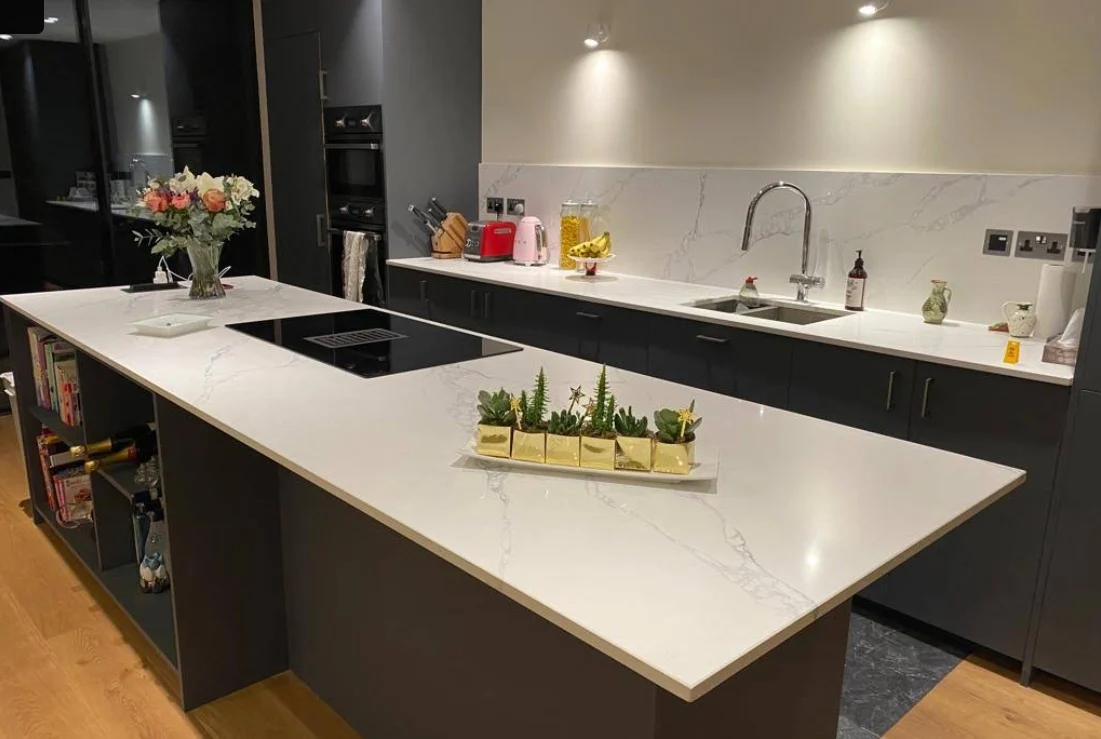
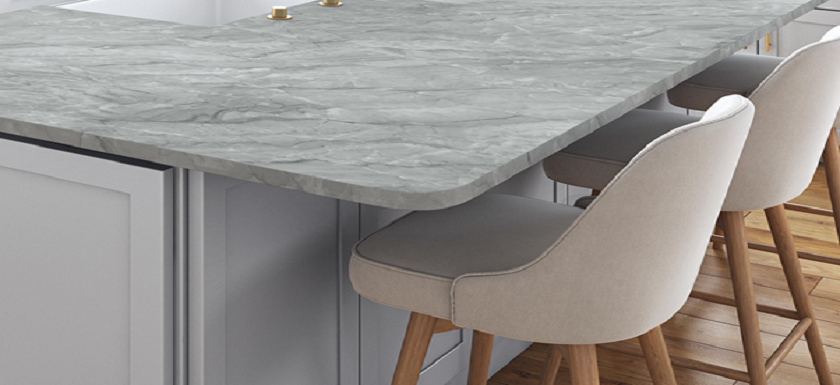
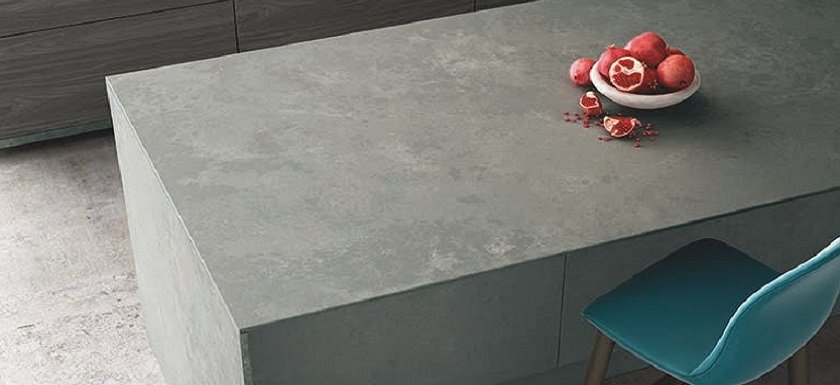
Every time you re-seal your sink, you are treating the symptom. The cause, a junction between two separate surfaces, remains. The lasting solution is quartz worktops in London, which are large enough to cover your kitchen without any joints at all. The giant quartz worktops and large-format sintered stone slabs become your saviour, as they have no joints, no sealant lines, and no dark corners for moisture and mould to colonise. Moreover, engineered quartz worktop is non-porous, meaning bacteria, soap residue, and moisture cannot penetrate the surface. So, no annual re-sealing, no overnight bleach treatments, no toothbrush scrubbing at midnight, going forward! The grey quartz worktops complement everything from modern handleless kitchens to warm, traditional painted cabinetry.
Opt for the Permanent Worktop Solution Today!
There can be a version of your kitchen where mouldy sealant simply isn’t a problem if you choose grey quartz worktops. Are you ready to make the switch?
Visit The Worktop Library and explore their full giant quartz and sintered stone collection. The Calacatta amber giant quartz, featuring a crisp white background with sweeping grey veins and warm golden-amber highlights, is the main highlight. Request a free sample online, or speak to the team directly and claim your seamless kitchen worktop today!